
Key Takeaways:
Double Weft Definition: Double weft extensions feature two layers of human hair stitched together onto a single attachment band, delivering double the density per track.
Track Real Estate Economy: Fine hair has limited scalp area to hide extension tracks; double wefts provide maximum fullness using fewer rows.
Seamless Blending: Uniform density from root to tip eliminates the “stringy” ends common when adding extensions to fine hair.
Safe Weight Guidelines: To protect fine roots from tension, total set weight should stay between 100g and 140g, placed strategically across the lower occipital scalp.
For anyone managing fine or thin hair, adding noticeable volume without creating visible tracks or pulling delicate roots can feel like a balancing act. Traditional single-layer hair extensions often require placing multiple tracks across the head to build fullness—a challenge when natural hair lacks the density to conceal numerous attachment rows.
Double weft hair extensions solve this dilemma by doubling the hair density on each track seam. By combining two hair layers into one cohesive strip, choosing double weft hair extensions for thin hair allows fine-haired wearers to achieve lush, enviable volume with fewer attachment points.
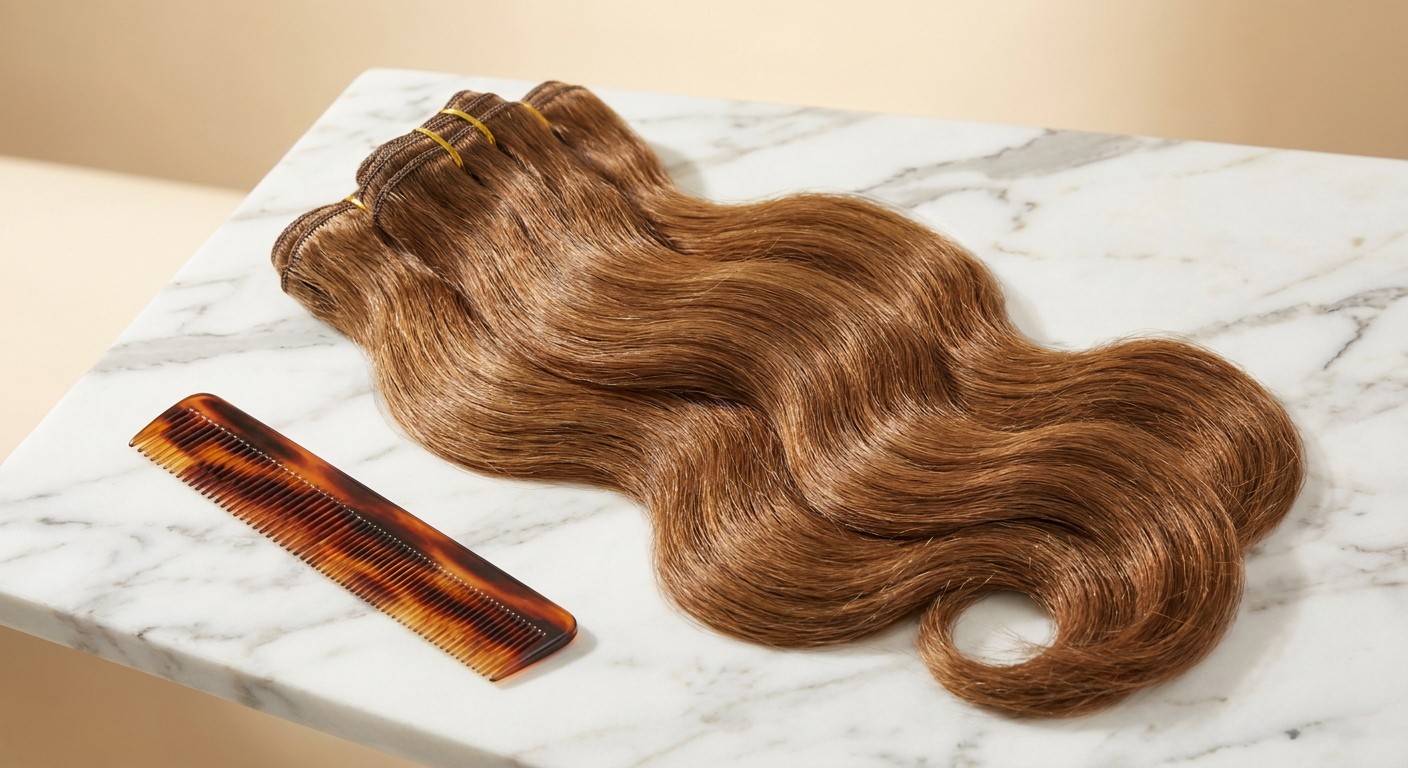
A weft is a continuous strip of hair strands attached along a top seam, designed to be installed via clips, beaded rows, sew-in tracks, or tape tabs.
A double weft hair extension takes this concept a step further by stitching two distinct layers of human hair together onto a single, reinforced top seam. Rather than applying two separate single tracks on top of each other, the double construction integrates both layers at the factory level.
Item | Detail |
|---|---|
Single Weft Construction | [ Single Hair Layer ] ===== (1 Track Band) |
Double Weft Construction | [ Layer 1 + Layer 2 ] ===== (1 Doubled Track Band) |
Double wefts are available in several construction methods, each offering specific benefits for fine hair:
Machine Double Wefts: Stitched together using precise industrial sewing. They are highly durable, shed-resistant, and ideal for clip-in sets where quick daily installation is preferred.
Hand-Tied Double Wefts: Crafted by hand to keep the seam extraordinarily thin and flexible. These lie virtually flat against the scalp, making them a favorite for beaded row sew-in installations on fine hair.
Flat PU / Skin Double Wefts: Feature hair double-layered into a ultra-thin polyurethane (PU) skin band. The flat seam mimics natural scalp growth and resists flipping or bulging under fine top hair.
Adding hair extensions to fine hair requires solving two core problems: achieving full volume and concealing the attachment points. Here is why double weft extensions are particularly effective for addressing both challenges.
Fine hair typically lacks the density needed to hide 5 or 6 separate extension rows. When too many tracks are installed, top sections part easily, exposing clips or beads underneath. Because double wefts combine two hair layers into one strip, you achieve the volume of four single tracks using just two double weft rows. This preserves natural leave-out hair on the crown to ensure complete coverage.
A common frustration for fine-haired extension wearers is the “A-frame” look—where natural hair looks dense at the roots but thins out dramatically toward the ends. Double weft extensions, especially those crafted from double-drawn hair, maintain thick density from seam to tip, creating a seamless, natural transition.
Installing 10 individual clip pieces or 6 beaded rows creates multiple tension zones across the scalp. By reducing the overall number of required pieces, double wefts minimize the overall number of clip or bead touchpoints, distributing weight across wider, stable horizontal sections.
Understanding how double wefts compare directly with single wefts helps determine which option fits your specific hair density.
Feature | Single Weft Extensions | Double Weft Extensions |
|---|---|---|
Hair Density per Track | Single layer (Standard density) | Double layer (2x density) |
Seam Thickness | Ultra-thin (1mm–1.5mm) | Slightly thicker (1.5mm–2.5mm; flat PU/hand-tied remain thin) |
Number of Tracks Needed | 4 to 6 rows for full head | 2 to 3 rows for full head |
Installation Time | Requires placing more pieces | Faster (fewer pieces to section and secure) |
Best For | Very short, extremely sparse, or fragile hair | Fine hair seeking medium-to-dramatic volume lift |
Choose Single Wefts if: Your natural hair is extremely sparse, actively breaking, or you are adding subtle highlight accents rather than overall body.
Choose Double Wefts if: You have fine hair with healthy roots, your main goal is overall volume and body, and you want to experience the full benefits of double weft hair extensions for thin hair without placing multiple tracks near your crown.
When evaluating weft craftsmanship, reviewing high-grade Remy human hair standards ensures the seam stitching remains soft and shed-proof over long-term wear.
Safety depends on weight management and installation technique. Because double wefts carry twice the hair per track, following key safety guidelines prevents unwanted scalp strain.
Pro Tip for Fine Hair: Never exceed 140 grams for a full-head set if your natural hair is fine. A 100g to 120g double weft set provides luxurious volume without pulling on delicate follicles.
The golden rule for fine hair is total weight allocation. Rather than hanging heavy single pieces on thin strands, double weft clip-ins or beaded rows should be anchored across wider horizontal sections of natural hair.
Avoid placing double wefts high on the crown or close to the hairline where scalp hair is sparse. Stylists recommend positioning double wefts strictly within the “safe zone”—the lower occipital region across the back of the head—where natural hair density is greatest and crown leave-out hair naturally drapes over the tracks.
For daily wear, selecting top-rated clip-in hair extensions featuring silicone-lined clips helps grip natural hair securely without aggressive backcombing or root tugging.
Proper maintenance preserves the seam integrity of double wefts and protects fine natural hair.
Gentle Brushing Routine: Always support the top seam with one hand while brushing from the ends upward using a loop brush or wide-tooth comb.
Wash with Care: Avoid applying heavy conditioner, oils, or silicone treatments directly onto the top weft seam. Concentrated oils can soften machine stitching or loosen hand-tied knots.
Thorough Drying: Because double wefts contain two layers of hair stitched together, the top seam holds moisture longer than a single weft. Always blow-dry the seam area completely on a cool or low heat setting after washing to prevent moisture buildup near the scalp.
Quality Verification: Before investing in extensions, consulting a testing human hair extension quality guide can help you verify cuticle direction and cuticle alignment, ensuring your double weft set remains tangle-free.
Yes. High-quality double weft clip-in extensions can be worn daily as long as they are removed before sleeping. For permanent wear, hand-tied or flat-weft double rows installed by a certified stylist should be moved up every 6 to 8 weeks to prevent strain on growing natural hair.
Not when placed correctly in the lower section of the head. Leaving a 2-inch perimeter around the hairline and at least 3 inches of natural leave-out hair at the crown ensures double wefts remain completely hidden even on fine hair.
With proper sulfate-free washing and low heat styling, double weft human hair extensions typically last 8 to 12 months for daily clip-ins, and 6 to 9 months for salon-installed sew-in wefts.
Double weft hair extensions offer a practical solution for fine-haired individuals who want noticeable hair volume without cluttering their scalp with multiple attachment tracks. By combining two hair layers into one streamlined piece, double wefts maximize density while keeping application fast, simple, and comfortable.
If you are ready to enhance your hair body, start with a lightweight double weft clip-in or consult a professional stylist to determine the optimal weight and placement for your unique hair texture.